What this Health Block does
Requirement that fits the horse
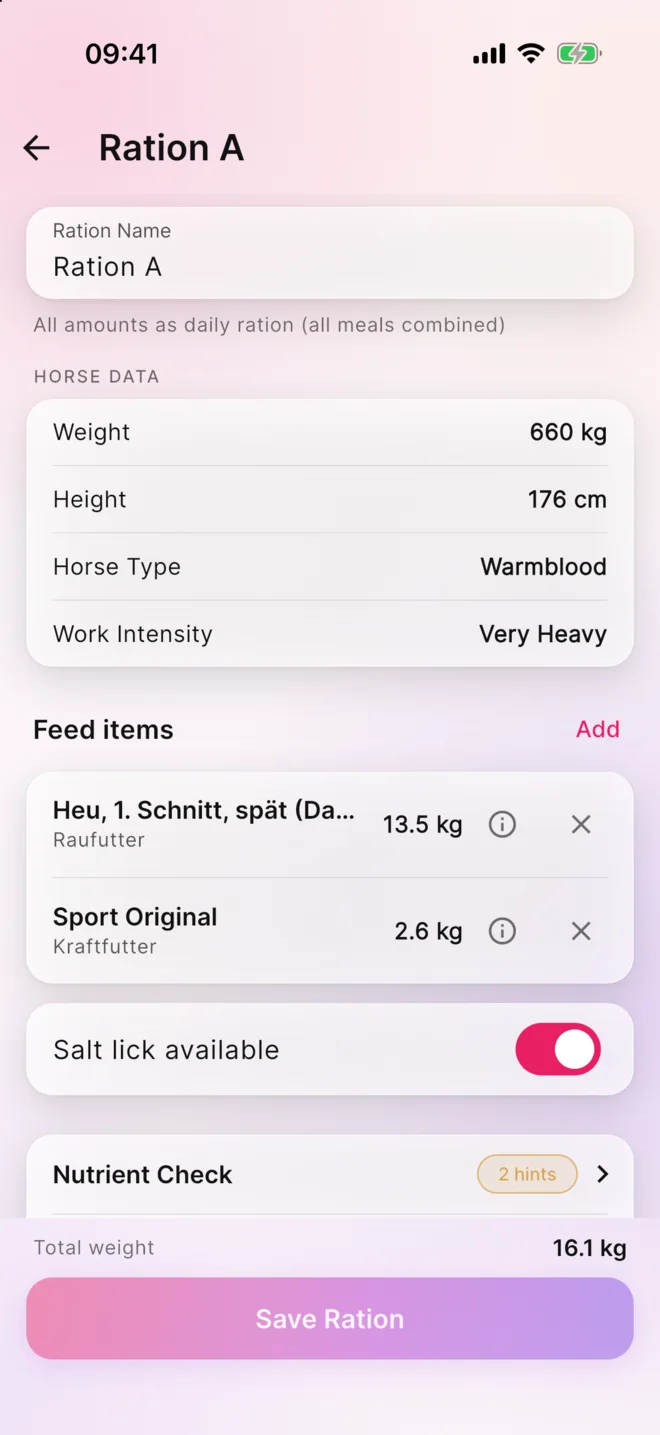
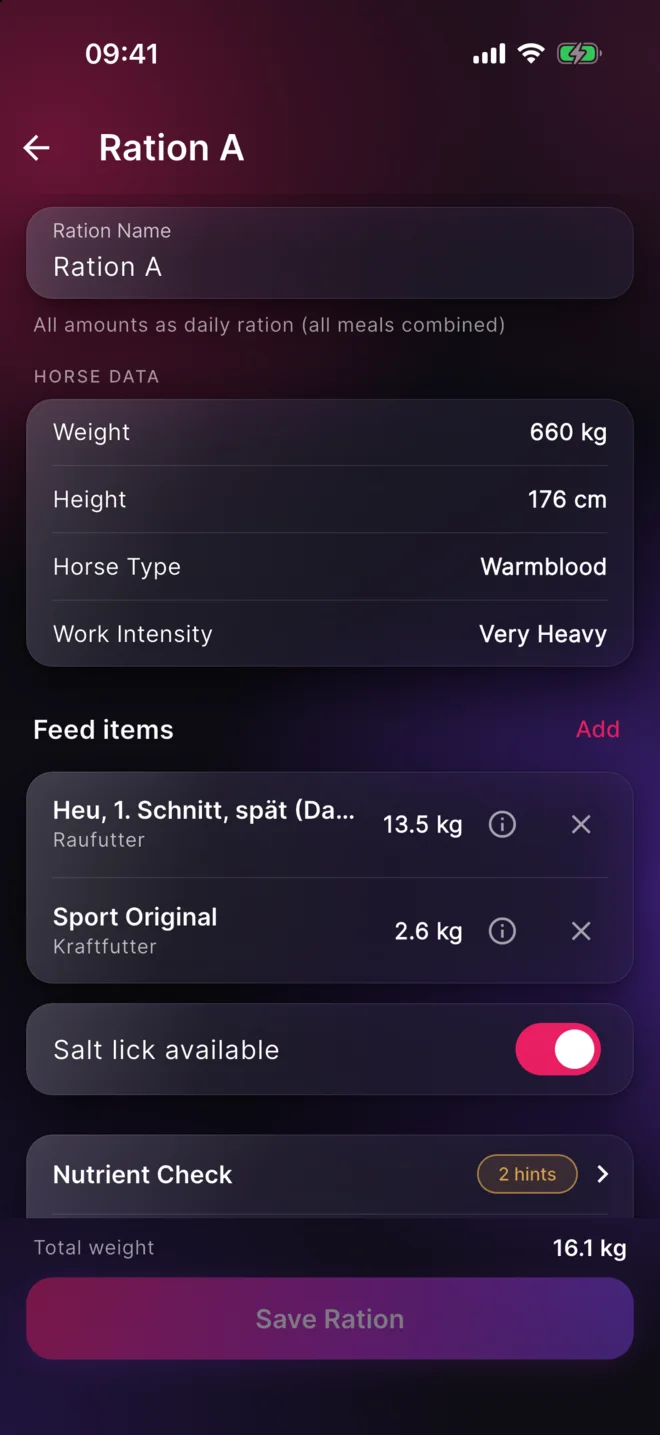
The requirement follows weight, height, horse type (from pony to draft horse) and workload from maintenance to very heavy work. Pregnant and lactating mares, growing horses and seniors are handled separately.
16 nutrients checked
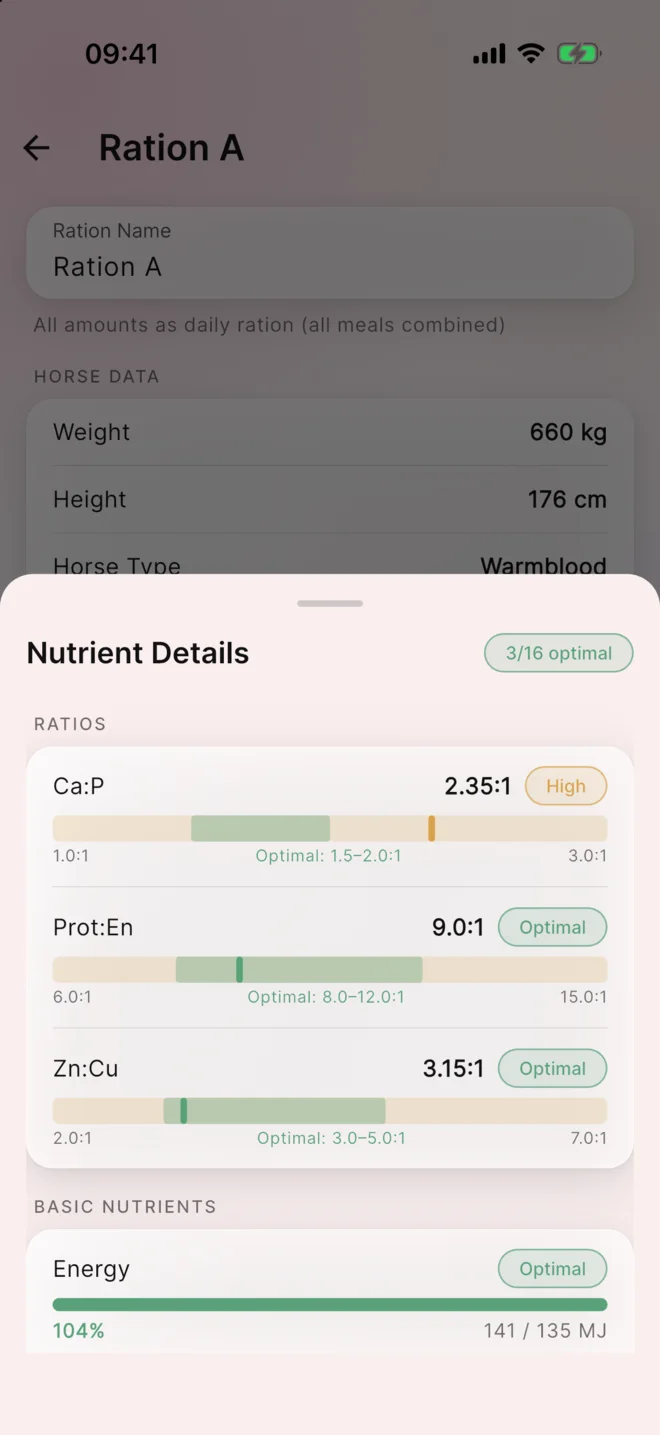
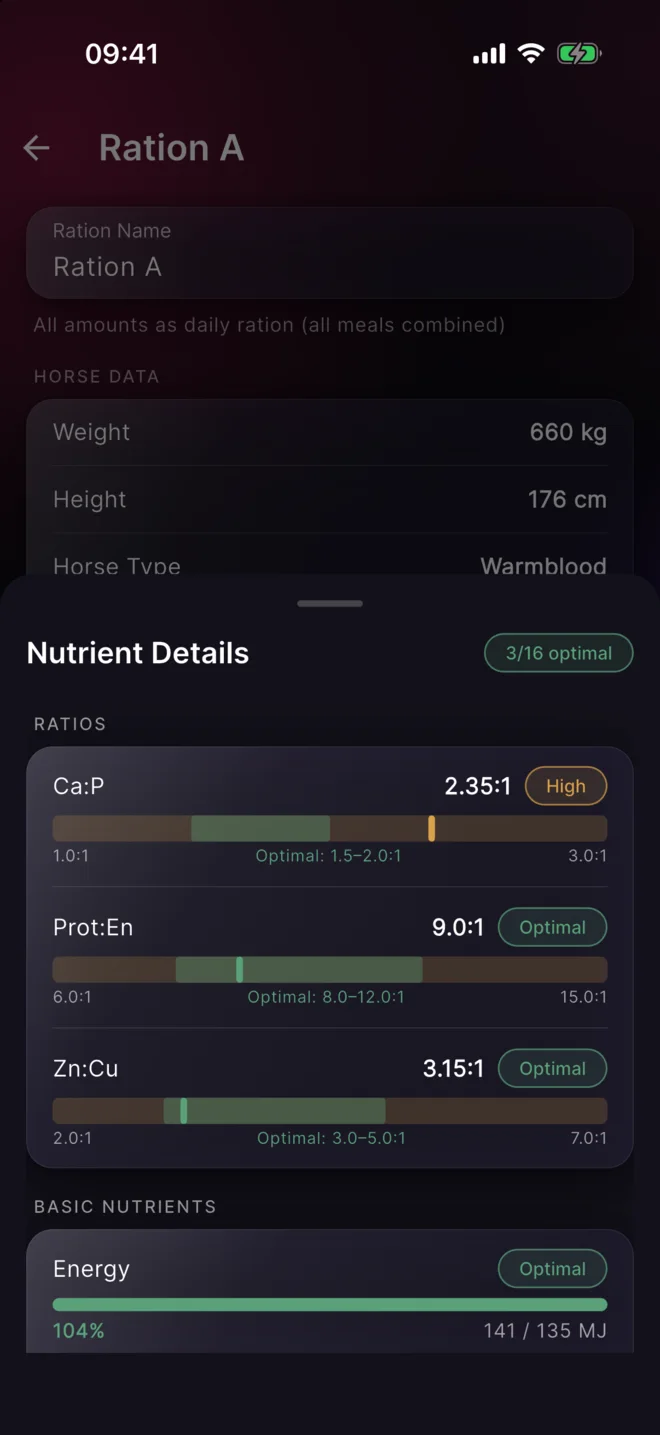
Energy, protein and crude fibre, the minerals calcium, phosphorus, magnesium, sodium and potassium, the trace elements copper, zinc, selenium, iron and manganese, and vitamins A, D and E. Plus the calcium to phosphorus ratio.
NRC or GfE
By default EQIO uses the recommendations of the German GfE (2014). In the settings you can switch to NRC (2007).
Scan the feed label
Photograph the label on the feed bag. The AI takes over the nutrient values, so there is nothing to type. You can also create your own feeds by hand.
Estimate hay without an analysis
For hay, haylage, grass silage, alfalfa and straw without a lab analysis, the AI estimates the values from cut, location and quality, with a photo if you like.
Optimise amounts
With one tap EQIO suggests adjusted amounts: it first balances calcium to phosphorus and zinc to copper, then closes gaps. The amount of roughage stays unchanged.
How it works
- Enter your horse's weight, type and workload.
- Pick feeds, scan a label or create your own feed, and enter the daily amounts.
- Read the nutrient check: every value shows whether supply is too low, right or too high.
Frequently asked questions
What is the calculation based on?
The default is the 2014 recommendations of the German Society of Nutrition Physiology (GfE). You can switch to the 2007 values of the National Research Council (NRC).
Do I need a hay analysis?
No, but it makes the result more accurate. Without one, the AI estimates the nutrient values of your hay. With one, you enter the values yourself.
Can I keep several rations per horse?
Yes, for example for summer and winter or for training and rest periods.
Does the app replace a nutritionist?
No. EQIO shows how the ration compares with the requirement on paper. With illness, metabolic problems or marked over- or underweight, feeding belongs in the hands of your vet or an equine nutritionist.